


Address / Local links: 42 Clifton Road, Welling
Family / Relatives: Son of Alfred Edgar and Euphemia Aylott of Welling
Other Information: A Stock Clerk at Smithfield Meat Market
GEORGE ALEXANDER AYLOTT was born on 12 October 1919 in Woolwich, the only child of Alfred Edgar and Euphemia Aylott .
Alfred Aylott had served in the Royal Field Artillery in WW1 from1913 until discharged in 1919. He was awarded a 30% disability pension on discharge. He served in France from October 1915 until December 1917. He married Euphemia Alexander at All Saints Church, Shooters Hill in July 1918. They lived in Plumstead and then moved to Welling at 42, Clifton Road where they lived until Alfred died on the 28 February 1960. Euphemia died in September 1980 in Hampshire.
After discharge from the Army the family lived at Eglinton Road Plumstead – Alfred worked for the Post office as a sorter and was associated with the St Johns Ambulance Brigade.
In 1939 Alexander, now 20 years old, lived at Clifton Road with his parents and, like his father, was associated with St Johns Ambulance Brigade as a First Aider. He was also an Air Raid Precautions (ARP) Warden or messenger for Bexley Borough.
George at this time was employed as a Stock Clerk at the Smithfield Meat Market
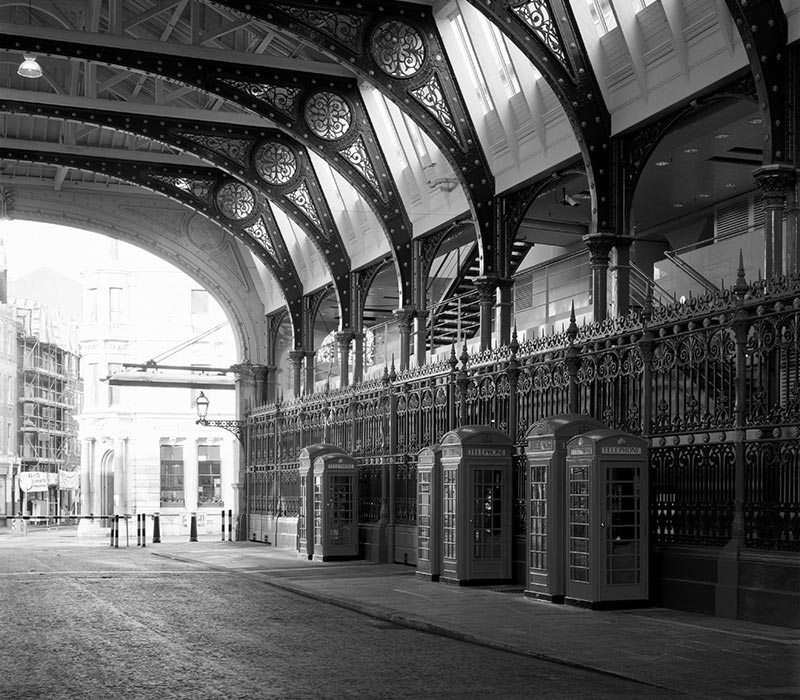
Smithfield Market had been established in 1860 and was the largest meat market in Europe. Meat has been traded at Smithfield for more than 800 years, making it one of the oldest markets in London.
The Smithfield that George worked in on Charterhouse St, was established by Act of Parliament; the Metropolitain Meat and Poultry Act 1860. The Central Market Building was completed in November 1868.
Over the years the market expanded with several new buildings including the Poultry Market, the Fish Market and the Red House. This latter building housed one of the first cold stores to be built outside of the London Docks and continued to serve the market until the mid 1970’s,
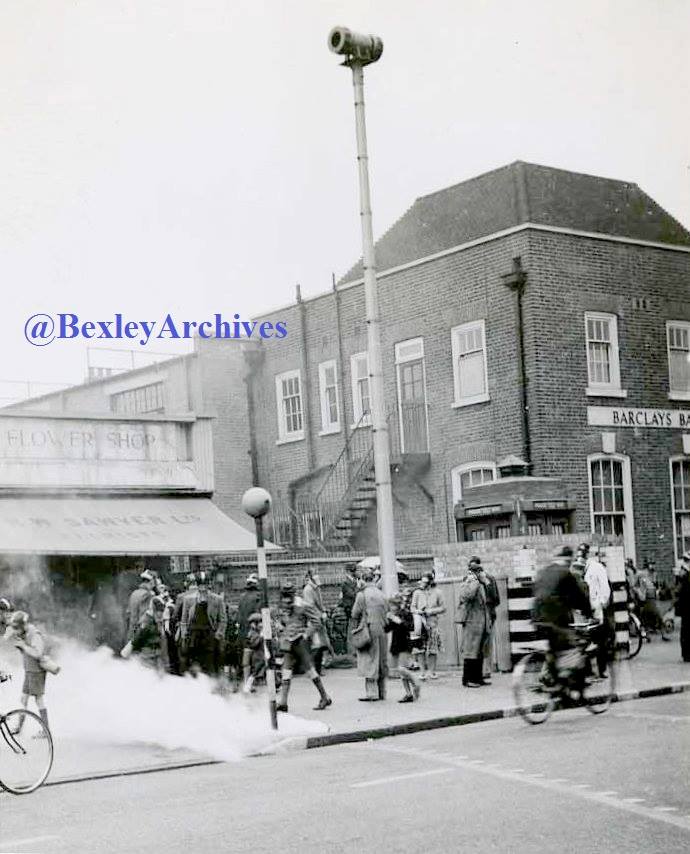
Every Local Council was responsible for organising ARP Wardens, messengers, ambulance drivers and liaising with police and fire brigades and George was one of the volunteers for ARP duties.
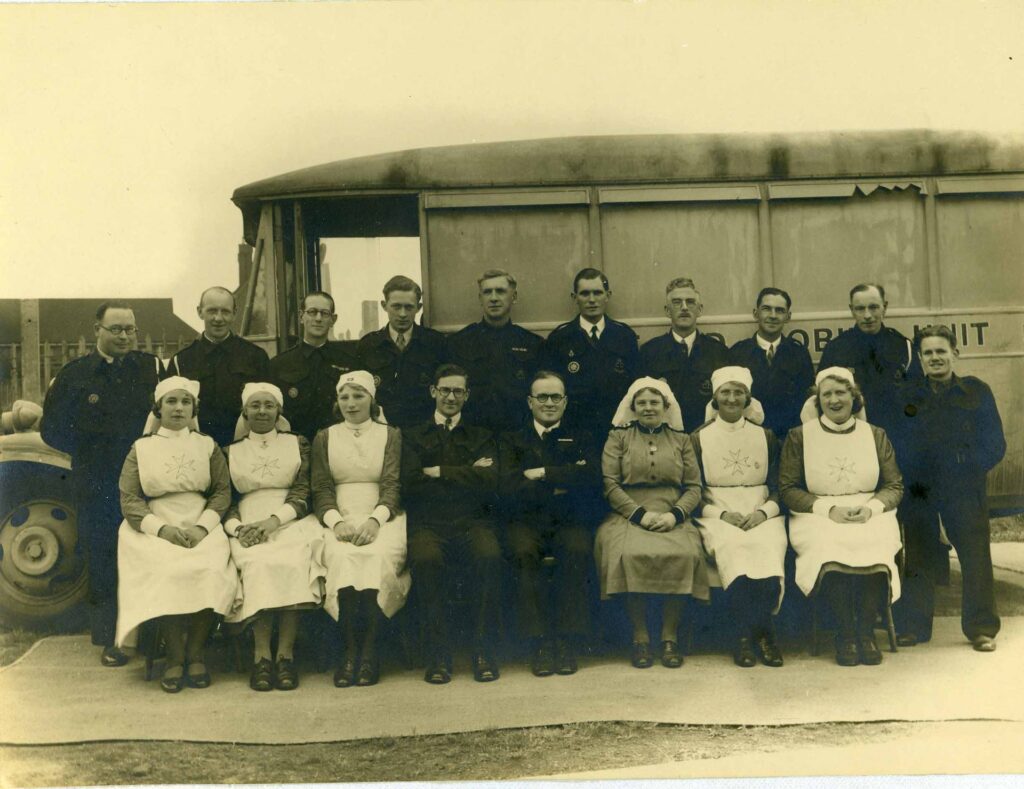
During the Second World War many thousands of St John volunteers worked with the army and navy overseas and at home. When Germn bombing raids hit civilian targets in the UK during the Blitz, the Order provided both medical treatment and First Aid training.
This is exemplified by the service of both father and son.
In July1941 Alexander married May Sinclair Diett (born 30 January 1923). May was a native of Greenwich and lived with her parents and two sisters at 285, Glenforth Rd. She was a capsule maker. May never remarried and died in December 2005 in Lewisham.
No doubt because of his training in St Johns Ambulance, George Alexander Aylott found himself serving in the Royal Army Medical Corps and by the time of his death in North Africa on 25 January 1942 , aged 22, had been promoted to Lance Corporal.
The Royal Army Medical Corps
“During World War Two technology enabled the RAMC greater access to mechanised land and air transport, allowing specialists and operating teams to get right to the front-line in an increasingly mobile war.
There were major medical developments pioneered by the army, such as the use of penicillin for the first time in the North African campaign and also the development of blood transfusion, which was crucial in wartime”…
The North African Campaign
Tobruk is a Mediterranean port with an excellent deep water harbour. During the war it was important to Allied and Axis forces alike, for the reception of supplies and reinforcements. In January 1941, it was taken from the Italians by General Wavell’s forces, and after the clearance of the demolitions in the harbour the port was usable and proved invaluable. When Rommel commenced his drive across Cyrenaica towards Suez it was deemed essential that Tobruk be held, and the resulting siege lasted from 11 April to 10 December 1941, when the Axis forces were driven back. They recovered far more quickly than was expected and by early February 1942, it was the Allies turn to fall back towards a line running southwards from Gazala to Bir Hakeim. It is during this period that George died. Again orders were given to hold Tobruk but in fell on 21 June. It was retaken five months later by the 8th Army in their final sweep along the North African coast into Tunisia.
George is commemorated at the Tobruk War Cemetery in Libya and his headstone is located in Plot 10 Row E 1 which is close to the Cross of Sacrifice shown in the photograph. His headstone has the personal inscription IN LOVING MEMORY. REST IN THE LORD
Tobruk War Cemetery incorporates the burial ground used during the siege and the memorial erected there at the time by the Australians has been replaced by a permanent memorial of a similar design. Many battlefield graves in the desert have been brough into the cemetery and George’s is one of these – he was buried in his final resting place on 18 August 1944.
There are now 2,282 Commonwealth servicemen of the Second World War buried or commemorated in Tobruk War Cemetery. 171 of the burials are unidentified but special memorials commemorate a number of the casualties know or believed to be buried among them. The cemetery also contains 171 war graves of other nationalities, most of them Polish.
…………………………………..
Pictured are the Smithfield Meat Market where George Aylott worked, ARP and St. John’s ambulance crews in Welling early in WW2, and the RAMC WW2 shoulder tag.
…………………………………………………….
If anyone is able to add any extra information, provide more family details, or suggest any corrections, please let us know – also, if anyone has any more photos of this individual listed on our memorials, please get in touch. Thank you

Commemorated
- St. Michael’s East Wickham Church Memorial Tablet
- Tobruk War Cemetery, Libya
This story has been researched by volunteers. We have taken every effort to ensure its accuracy. If you are related to George Alexander Aylott, or if you have any further information, please do get in touch.