


Address / Local links: 327 Gipsy Road, Welling
Family / Relatives: Husband of Catherine Gladys Cooper
Other Information: A Hardware Shop Worker
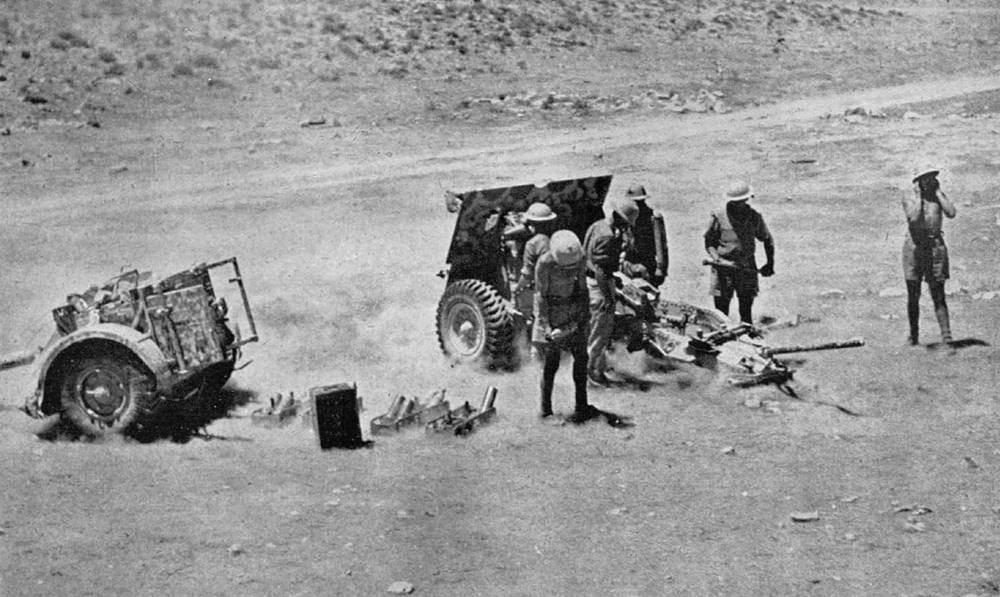
“The 31st Field Brigade Royal Artillery was first raised in Norwich in 1936. Sent to Egypt, the Brigade became the 31st Field Regiment Royal Artillery in 1938, forming part of the 4th Indian Division. After the outbreak of the Second World War, the Regiment saw action in Egypt and Eritrea. In 1941, it fought in the desert war in Libya and was nearly destroyed at Alem Hamza. Re-built in Cyprus during 1942, the Regiment went on to fight in Tunisia and Italy 1943-1944 and was sent to Greece at the end of 1944, to help maintain peace between the monarchists and communists. The Regiment was dispersed in 1946”.
One of their Brigade’s casualties in the North African campaign was Welling’s Gunner Cooper.
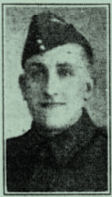
Alfred Edward Herbert Cooper had been born on Christmas Eve 1911 in Littleport, a small fenland village in Cambridgeshire. His parents, George Henry Cooper and Henriette Cooper (nee Holder) both came from farming families in Littleport – they’d married in Ely in 1904, and George’s trade was given as a farm horsekeeper. (He had previously been in the army, with the Suffolk Regiment). They had two other children, Mabel Ellen Rosina born in 1904, and William George Edward in 1906.
By 1921 the family had left Littleport and settled in south east London – records list them living at 28 Gunning Street, Plumstead, with George working as a ‘General labourer; Griff & Son’. Subsequent records give his job as ‘excavator’ so already in his mid 50s, we can only assume that his life was a hard one…
By the time of the 1939 Register George is recorded as living at 3 Hylton Street Abbey Wood with his brother-in-law Isaac Balkwill. Henriette is recorded as living with Mabel Balkwill in a hut at Homestall Farm Swale Kent. Their other children, Mabel Ellen Rosina and William George Edward both appear to have settled in and around south east London – Mabel was a bottle washer for Foster & Sons and married Henry Bryant in Plumstead in 1925. William worked on laying telephone cables in Greenwich, and married Norah Callaghan in 1930.
Meanwhile, our Alfred had married a Camberwell girl – Catherine Gladys Page (1914-1994) in 1937, and settled at 327 Gipsy Road in Welling – a daughter, Colleen, was born in 1939. (After the war, Catherine remarried in 1946 to Edward Brooks, and died in 1994 in Thanet).
The 1939 Register has the 28 year old Alfred as working in a hardware shop – a far cry from being a Royal Artillery gunner and ‘Desert Rat’ in the north African campaign a few short years later…
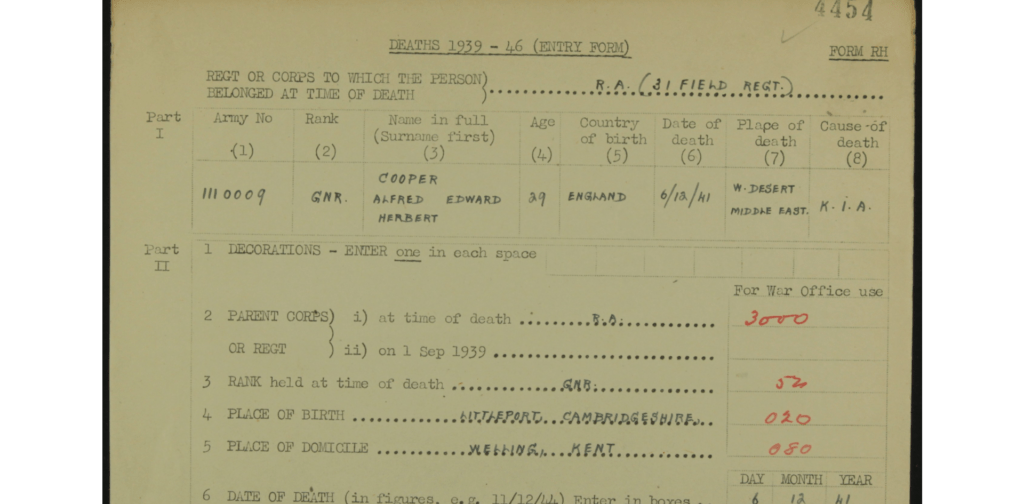
Alfred’s military document (pictured) states ‘KIA’ (Killed in action) on 6th December 1941 W.Desert/Middle East…this must have been part of the major campaign Operation Crusader…
“Operation Crusader (18 November – 30 December 1941) was a military operation of the Western Desert Campaign during the Second World War by the British Eighth Army (with Commonwealth, Indian and Allied contingents) against the Axis forces (German and Italian) in North Africa commanded by Generalleutnant (Lieutenant-General) Erwin Rommel. The operation was intended to bypass Axis defences on the Egyptian–Libyan frontier, defeat the Axis armoured forces near Tobruk, raise the Siege of Tobruk and re-occupy Cyrenaica.
On 18 November 1941, the Eighth Army began a surprise attack. From 18 to 22 November, the dispersal of British armoured units led to them suffering 530 tank losses and inflicting Axis losses of about 100 tanks. On 23 November, the 5th South African Brigade was destroyed at Sidi Rezegh but caused many German tank casualties. On 24 November Rommel ordered the “dash to the wire” and caused chaos in the British rear but allowed the British armoured forces to recover. On 27 November, the New Zealanders reached the Tobruk garrison and ended the siege.
Lack of supplies forced Rommel to shorten his lines of communication and on 7 December 1941, the Axis forces withdrew to the Gazala position and on 15 December began a withdrawal to El Agheila”.
The significant date of 7th December is interesting, with Rommell’s forces withdrawing – the previous day had seen the death in battle of our own Alfred Cooper. His body was never found.
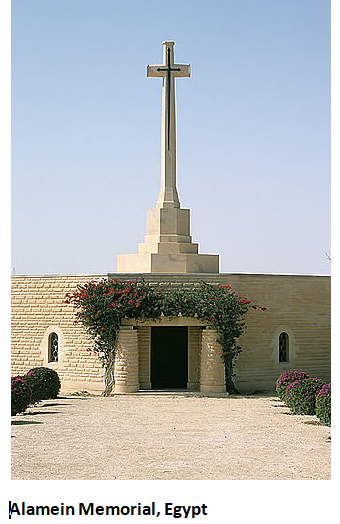
Alfred Cooper’s name is today listed on the Alamein Memorial in Egypt.
The Alamein Memorial forms the entrance to the El Alamein War Cemetery.
“Alamein is a village, bypassed by the main coast road, approximately 130 kilometres west of Alexandria on the road to Mersa Matruh. The first Commission road direction sign is located just beyond the Alamein police checkpoint and all cemetery visitors should turn off from the main road onto the parallel old coast road. The cemetery lies off the road beyond the ridge, and road direction signs are in place approximately 25 metres before the low metal gates and stone wing walls which are situated centrally at the road edge at the head of the access path into the cemetery. The Cross of Sacrifice feature may be seen from the road”
“The campaign in the Western Desert was fought between the Commonwealth forces (with, later, the addition of two brigades of Free French and one each of Polish and Greek troops) all based in Egypt, and the Axis forces (German and Italian) based in Libya. The battlefield, across which the fighting surged back and forth between 1940 and 1942, was the 1,000 kilometres of desert between Alexandria in Egypt and Benghazi in Libya. It was a campaign of manoeuvre and movement, the objectives being the control of the Mediterranean, the link with the east through the Suez Canal, the Middle East oil supplies and the supply route to Russia through Persia.
The ALAMEIN MEMORIAL forms the entrance to Alamein War Cemetery. The Land Forces panels commemorate more than 8,500 soldiers of the Commonwealth who died in the campaigns in Egypt and Libya, and in the operations of the Eighth Army in Tunisia up to 19 February 1943, who have no known grave. It also commemorates those who served and died in Syria, Lebanon, Iraq and Persia”.
………………………………..
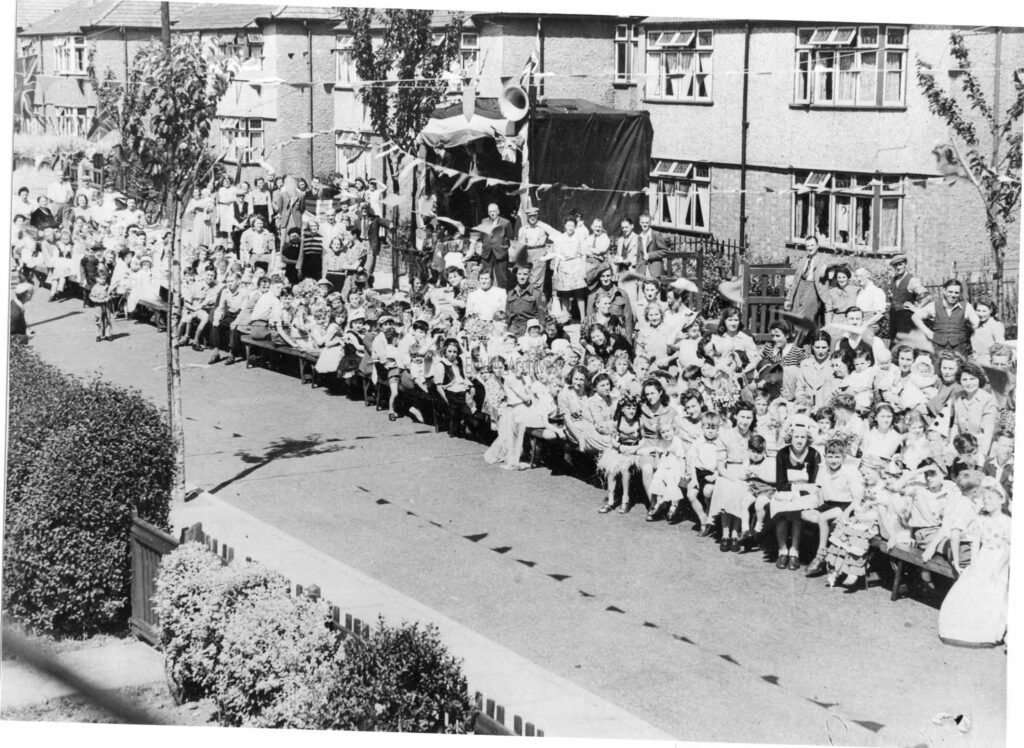
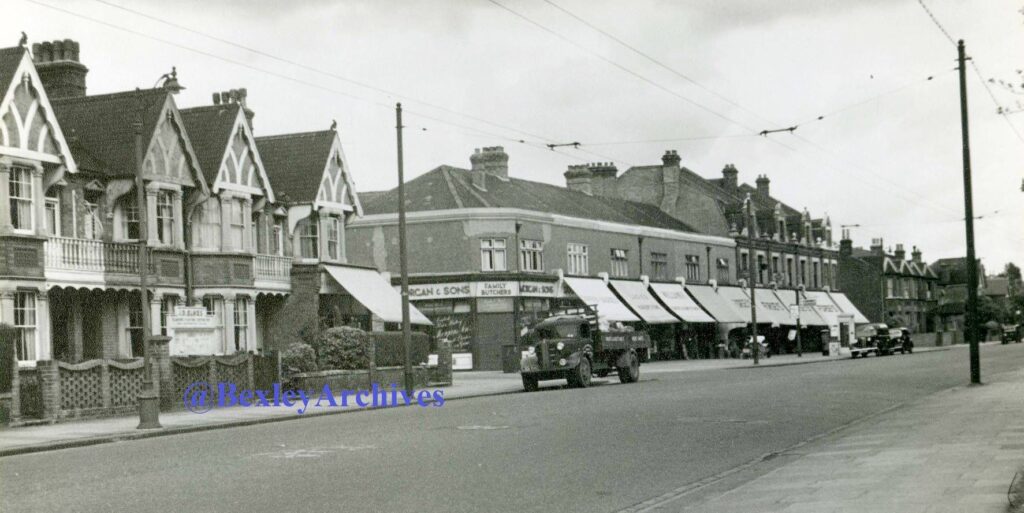
Our images show Alfred’s military death record, a map of the north African campaign, a contemporary Royal Artillery unit in the western desert, plus two street images – a Gipsy Road VE Day party in 1945 and a postwar scene of Park View Road/Gipsy Road.
………………………………..
If anyone is able to add any extra information, provide more family details, or suggest any corrections, please let us know – also, if anyone has any more photos of this individual listed on our memorials, please get in touch. Thank you.


Commemorated
- Welling War Memorial
- Alamein Memorial, Egypt
This story has been researched by volunteers. We have taken every effort to ensure its accuracy. If you are related to Alfred Edward Herbert Cooper, or if you have any further information, please do get in touch.