


Died: As a Japanese POW
Address / Local links: Queen’s Road, Upper Wickham Lane
Family / Relatives: Son of Charles John and Ellen Lippard of Welling. Husband of Mabel Mary Lippard of Welling
Local Papers / Websites: BHO 26th March 1943 and 4th January 1946
Other Information: Foster’s School pupil and East Wickham Boy Scout. He worked at his father’s pub, The Rose and Crown, Welling
………………………………………………………………………………………………………………………………………………………………….
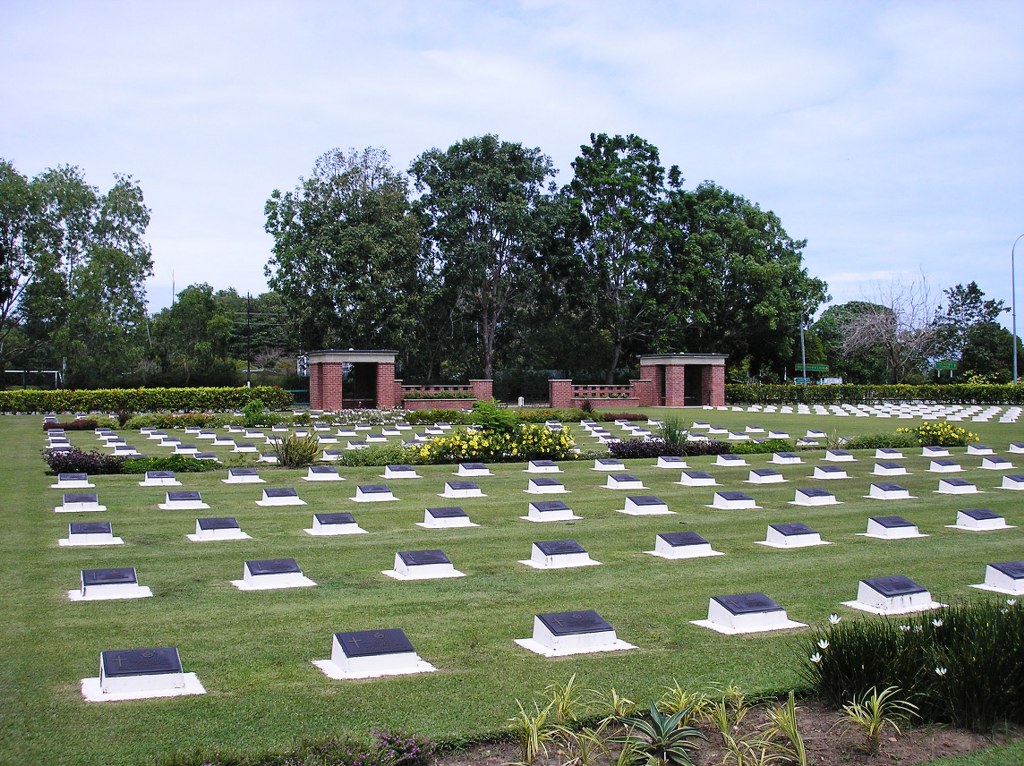
It is just a short distance from the Rose and Crown pub in Welling High Street and the Far East Prisoners of War Association memorial in Danson Park, but both are a world away from the Labuan War Cemetery, Malaysia, where Herbert Frank Lippard’s remains now lie…
Labuan War Cemetery, Malaysia
The Commonwealth War Graves Commission warns potential visitors; “PLEASE NOTE – It is important to check the weather forecast before visiting the Cemetery, as it is located in an exposed location. In addition, there may be snakes present”.
“Labuan (part of Sabah, Malaysia) is a small island in Brunei Bay, off the coast of north-west Borneo. The island is best reached by air from Kuala Lumpur, the Malaysian capital, from where there are daily flights. There are also flights from Singapore and Manila. The cemetery lies on the Jalan Tanjong Batu road which leads from the airport to the town. It is less than a kilometre from the airport and about 3 kilometres from the Island’s town; Victoria. Within the Cemetery will be found the Labuan Memorial and the Labuan Cremation Memorial”.
HISTORY INFORMATION
“From 1880 until over-run by the Japanese in 1942, the State of North Borneo was governed by the British North Borneo Chartered Company, the last chartered company to administer any part of the British Empire. It did not become a British Crown Colony until 26th June 1946, when the Chartered company transferred the sovereign rights and assets to the Crown. In July 1946, Sarawak was ceded to Britain, and thus was formed the new Crown Colony of Sarawak. Brunei was, until 1984, a British Protected State (it is now an independent Sultanate).
Strategically important after Singapore as the key to the area between Malaya and Australia, and a springboard for any large scale operations on Malaya and Java, Borneo came within the Malaya command, and North Borneo was the first of the British possessions in the Pacific to fall to the Japanese. Through lack of resources only token forces could be stationed there, and they could be expected to do little more than gain sufficient time for the demolition of the oilfield installations. In December 1941 the Garrison consisted of the 2/15th Punjab Regiment; they were stationed at Kuching in Sarawak, where there was an airfield, and at Miri, some 400 miles as the crow flies to the north-east. At Miri and at Seria, in near by Brunei, were the oilfields; and on the 8th December 1941 orders were given for their demolition. This the local garrison carried out successfully, the troops, oil company officials and a detachment of Straits Settlements Police were evacuated by sea on the 13th. On the 16th, Japanese troops landed at Seria.
On December 23rd orders were received for the demolition of the landing ground at Kuching which, as well as the town, had suffered several air attacks during the few days before that date. On December 24th Japanese landing-craft made their way up the waterways between the sea and Kuching, and by the afternoon of that day the Japanese flag was flying over the residence of the Rajah of Sarawak. The following morning the British Commander, Lt. Col. Lane, decided to withdraw westwards into Dutch West Borneo, and then south. On reaching Sanggau on December 29th the battalion came under the orders of the local Dutch commander. There it fought alongside the Dutch to prevent the Japanese from taking the airfield at Sanggau, the principal Anglo-Dutch base in West Borneo. In Dutch Borneo, Tarakan, an important oil centre in the north-east, was taken on the 10th January 1942; and Balikpapan, farther south, with its huge modern refineries and groups of oil tanks was lost at the end of the month.
Finally, through February and March, after fighting a rearguard action, the Punjabis made their way through wild and difficult country to the south coast of Borneo. This they reached, exhausted, towards the end of March, having covered a total distance of some 800 miles since leaving Kuching. The Dutch, by then, had been forced to surrender, and on the 3rd April the 2/15th Punjab Regiment became Prisoners of War.
In 1945 Borneo was freed from the Japanese by Australian forces. The Commander of the 9th Division, Australian Imperial Force, received the unconditional surrender of the 32nd Japanese Southern Army in North Borneo and Sarawak on a spot in the north of Labuan island, which is now marked by a plaque recording the fact. The recovery of Borneo virtually completed the tactical control of the South pacific.
After the fall of Singapore several thousand British and Australian Prisoners of War were sent to camps in Borneo, mainly in the Sandakan area on the eastern coast of North Borneo, where they were employed on aerodrome construction. The Australians belonged to the 8th Australian Division (“B” force numbering 1,494 and “E” force 500). In October 1943 most of the officers were separated from their men and sent to Kuching. Thereafter conditions at Sandakan greatly worsened; the men were starved, beaten and overworked by their captors. In February 1945 the Japanese, anticipating Allied landings in North Borneo, decided to move the Prisoners of War westwards to Ranau, more than 160 miles inland from Sandakan. Although many had already been transferred to other centres, more than 1,900 British and Australian servicemen remained to take part in the “Death march to Ranau”. Those who fell, sick or exhausted, on the journey were killed; the survivors who reached Ranau were made to perform superhuman work on starvation rations. Out of the 2,000 men who left Sandakan only 260 arrived at Ranau, and most of these succumbed later. Only six survived the end of the war. These six escaped from Ranau and were living with the local people when rescued.
When the Australian Army Graves Service entered Borneo they followed the route from Sandakan to Ranau, and found many unidentifiable victims of this infamous march. These and other casualties from Battlefield Burial Grounds and from scattered graves throughout Borneo were taken in the first instance to Sandakan, where a large number of prisoners of war were already buried. This flat coastal area, however, was subject to severe flooding and it proved impracticable to construct and maintain a permanent cemetery. The Sandakan graves, numbering 2,700 of which more than half were unnamed, were therefore transferred to Labuan War Cemetery in 1949, which was specially constructed to receive graves from all over Borneo.
As well as the graves from Sandakan, about 500 are from Kuching where there was another large prisoner-of-war camp. The total number of burials is 3,922. The preponderance of unidentified graves is due to the destruction of all the records of the camps by Lieutenant-Colonel Suga, the Japanese commandant, before the Australians reached Kuching, his headquarters. When apprehended, this man committed suicide rather than face questioning on his conduct of the Borneo Camps”.
Our Private Lippard died at the Batu Lintang camp
“Batu Lintang camp (also known as Lintang Barracks and Kuching POW camp) at Kuching, Sarawak on the island of Borneo was a Japanese-run internment camp during the Second World War. It was unusual in that it housed both Allied prisoners of war (POWs) and civilian internees. The camp, which operated from March 1942 until the liberation of the camp in September 1945, was housed in buildings that were originally British Indian Army barracks. The original area was extended by the Japanese, until it covered about 50 acres. The camp population fluctuated, due to movement of prisoners between camps in Borneo, and as a result of the deaths of the prisoners. It had a maximum population of some 3,000 prisoners.
Life in the camp was harsh, with POWs and internees alike forced to endure food shortages, disease and sickness for which scant medicine was made available, forced labour, brutal treatment, and lack of adequate clothing and living quarters. Of the approximately 2,000 British POWs held there, over two-thirds died during or as a result of their captivity. The construction and operation of a secret radio receiver for over 2½ years, from February 1943 until the liberation of the camp, was a morale booster and allowed the prisoners to follow the progress of the war. Discovery would have resulted in certain death for those involved”
For more see https://en.wikipedia.org/wiki/Batu_Lintang_camp
Herbert Lippard had been serving with the 77 HAA (Heavy Anti-Aircraft) Regiment in the Far East, part of the often forgotten ‘Java Gunners’ unit – with the Japanese invasion of Borneo, Herbert and his colleagues had been forced to surrender by the early months of 1942…long years of captivity and suffering were to follow.
Herbert Frank Lippard was born on 25th July 1905. His baptism records list his parents as Ellen and Charles John Lippard “publican” – the family ran the Rose & Crown pub in Welling.
They had married in December 1908 in Greenwich (Ellen Boyton was the daughter of a coachman there) – Charles’ family had been publicans for some time, and by 1900 they were running the Rose & Crown. Two sons (William Charles and Frederick John) were born there, before Herbert’s birth in 1905.
Ellen died in October 1936, before the war and the loss of her son. Charles Lippard died in 1949 – both were buried at St. Michael’s East Wickham.
Our Herbert worked at the family pub as a barman. In July 1927 he married Mabel Mary Matthews, a Welling girl, the daughter of a general labourer at the Royal Arsenal. (In April 1946, she remarried to Thomas William Armstrong Baker – who, it appears, had also been a prisoner of war of the Japanese – they subsequently moved to Orpington, where Mabel lived until her death in 1998)
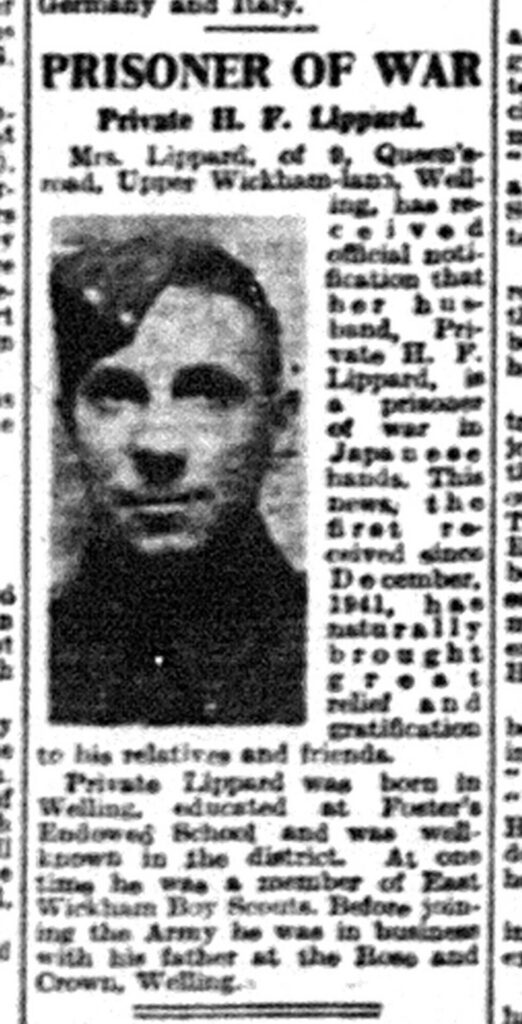
As for our Herbert, we know from various newspaper cuttings that he had been a Foster’s School pupil and East Wickham Boy Scout. The 1939 Register lists him as being a barman, but also with a Civil Defence Role – as an ARP St John’s Ambulance worker in Welling – a grim time in the town’s history…
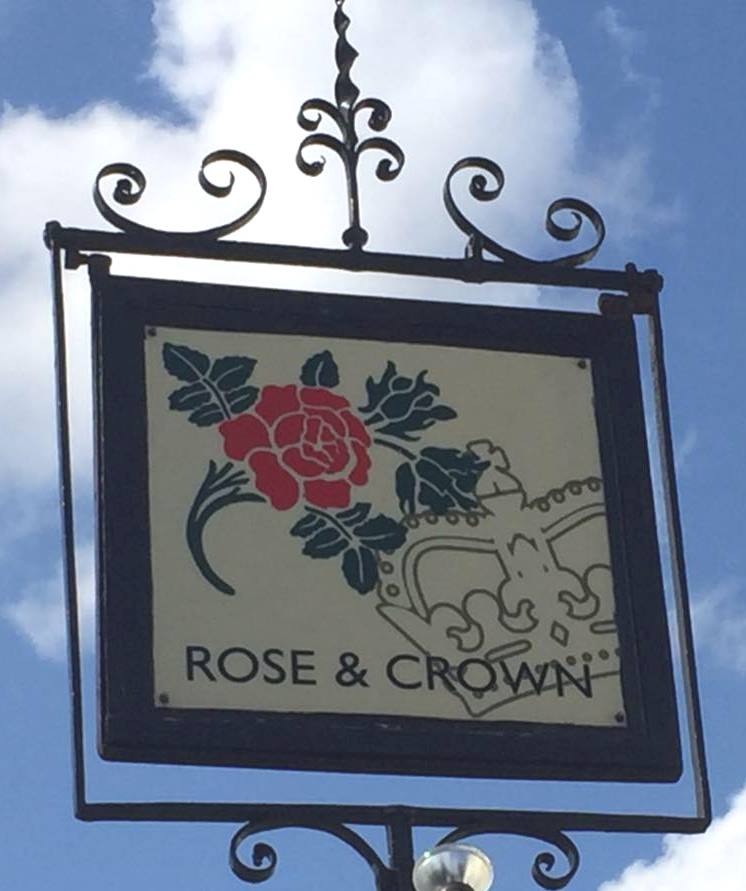
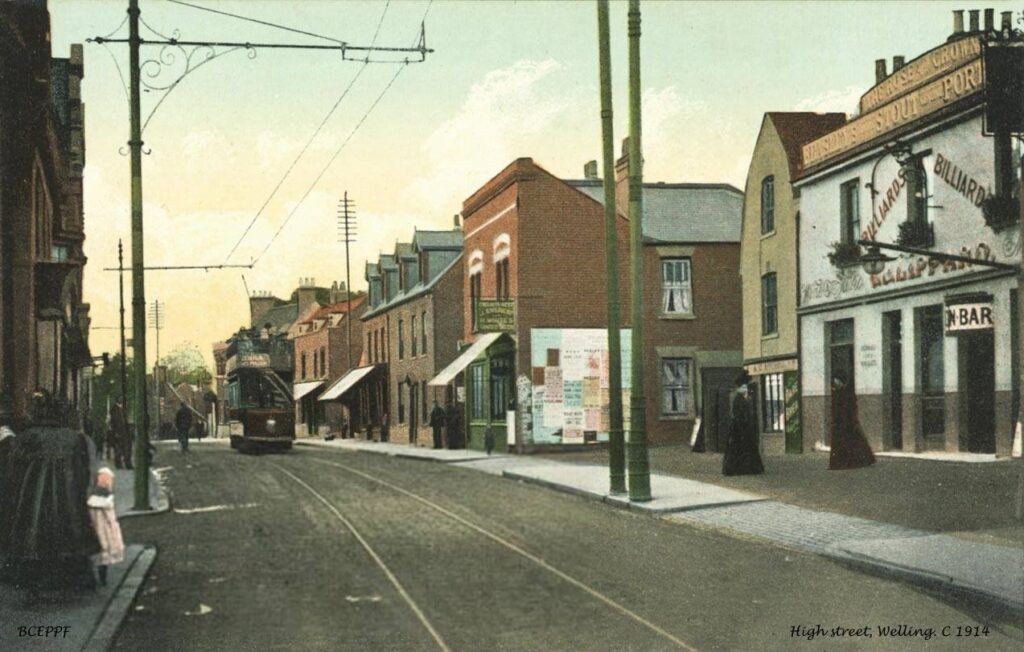
The Rose and Crown
The Lippard family and the pub itself would probably have seen much of Welling’s history, too – The Rose and Crown in Welling is first recorded in 1751, when “It lay within three acres of cherry orchard”…Early documents also list some delightful names of owners and licensees ~ “Neighbour Frith, Street Holding, and Paul Greathead”.Alas, the original pub burned down in the 1870s, and here’s another tale, no doubt retold quite often:
“The local fire brigade, which had only been formed in 1869, kept their engine at Mr. Moody’s at Bexleyheath Market place…
When the midnight call came there was great difficulty in obtaining horses to pull the engine…
Eventually they persuaded Charles Mansfield to hitch up two of his omnibus horses and they set off for Welling…
They arrived about 1.00 am to loud boos of the assembled crowd, as the pub had by then been destroyed and the fire was spreading to the adjacent Mitchell’s bakery…
They suffered further indignity by being beaten to the fire hydrant by members of the Shooters Hill Fire Brigade…
Shamefaced, they returned to Bexleyheath, vowing to ensure that henceforth horses were always ready on call”….
The pub was rebuilt, and later sold at auction in 1891, by relatives of the owners of the nearby Nags Head…a few years later the Lippards took over. The splendid new pub boasted “A tap room, bar, parlour, bar parlour with a clubroom upstairs, whilst in the garden was a skittle ground”…
So, if you are ever in the Rose and Crown itself, then raise a glass to its long lost barman Herbert Lippard.
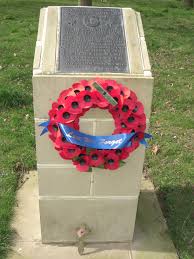
You could also take a short walk into Danson Park, where you will find the Far East Prisoners of War Association memorial.
The bronze plaque on a yorkstone pillar there unveiled on 21st November 1985 has a tablet which reads;
FAR EAST PRISONER OF WAR/ ASSOCIATION (LONDON)/ 1941 1945/ “TO KEEP GOING THE SPIRIT/ THAT KEPT US GOING”/ THESE OAK TREES ARE DEDICATED/ TO THE MEMORY OF ALL THOSE/ WHO DIED FIGHTING AGAINST JAPAN/ AND OF OUR COMRADES WHO DIED/ AS A RESULT OF THEIR CAPTIVITY/ IN THE JAPANESE PRISON CAMPS/ “THE PRICE THAT WAS PAID WE WILL/ ALWAYS REMEMBER/ EVERY DAY, EVERY MONTH, NOT JUST NOVEMBER”/ 21ST NOVEMBER 1985
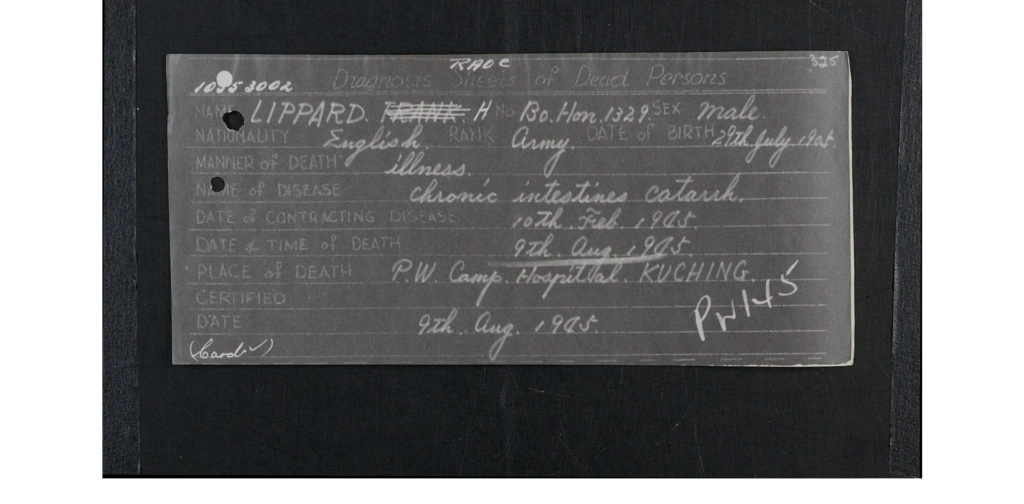
It appears that Herbert Lippard died in captivity on 9th August 1945 of ‘chronic intestinal catarrh’ – a few weeks later on September 2nd 1945, Japanese representatives signed the official Instrument of Surrender, and the war in the Far East was over.
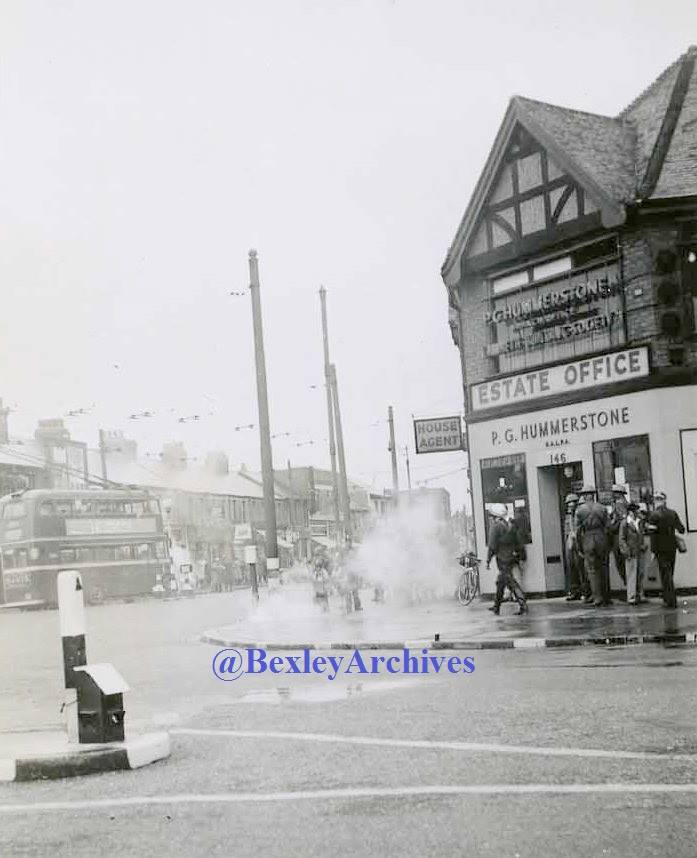
Among the images are press cuttings and POW records, ARP exercises at Welling corner from around 1940, plus pictures of Herbert’s pub, his final resting place, and the Danson POW memorial.
…………………………………………………….
If anyone is able to add any extra information, provide more family details, or suggest any corrections, please let us know – also, if anyone has any more photos of this individual listed on our memorials, please get in touch. Thank you.



Commemorated
- St. Michael’s East Wickham Church Memorial Tablet
- Labuan War Cemetery, Malaysia
This story has been researched by volunteers. We have taken every effort to ensure its accuracy. If you are related to Herbert Frank Lippard, or if you have any further information, please do get in touch.