


Died: In Oxford Hospital, of head wounds
Address / Local links: 81 Porthkerry Avenue, Welling
Family / Relatives: Son of Henry Edwin and Maud Florence Spells of Welling
Local Papers / Websites: BHO 9th March 1945 and 16th March 1945
Other Information: Previously with Welling St John Ambulance and Home Guard
Stanley W Spells
Stanley Spells’ short life ended at the Oxford Military Head Injuries Hospital (St. Hugh’s) which between 1939 and 1945 treated over 13,000 patients… “For the duration of World War II, St. Hugh’s College, which is one of the Colleges which constitutes the University of Oxford and was then for women only, was requisitioned and became a military hospital specialising in head injuries. The women undergraduates were moved into alternative accommodation, left vacant by the departure of the vast majority of male undergraduates to serve in the ArmedForces and brick huts were built all over the main lawns to house wards, occupational therapy units, etc. The College buildings themselves were relatively new, the earliest dating from 1915, the most recent at that time dating from 1936, so they were relatively easy to keep clean, and also were not constructed on a traditional “staircase” system, so movement around them was relatively simple for recuperating patients and their attendant staff. Oxford is close to Brize Norton so the wounded could be flown back from the front and transferred quickly to either St. Hugh’s or the Radcliffe Infirmary. Hugh Cairns, the eminent neurosurgeon, realised that the quicker head wounds were treated, the better the prognosis for the patient, and from St. Hugh’s he sent out Mobile Neurosurgical Units, which performed operations on the injured as close as possible to the battlefront. The patients were then sent back by air for fuller treatment in Oxford. As a result of this and the development of penicillin, used for the first time in England at St. Hugh’s and the Radcliffe Infirmary, the mortality rate for those suffering head injuries dropped from 50% in World War I to 5% in World War II. Oxford also had the Morris car factory at Cowley and Lord Nuffield was persuaded to tool up a set of machinery to produce the metal “Tantalus” plates used in the repair of skull damage. Between 1939 and 1945 some 13,000 patients were treated at St. Hugh’s, which had 300 beds. Not only Allied troops but also prisoners of war benefited from care in the Mobile Neurosurgical Units and at St. Hugh’s”…
Stanley’s Regiment
The 107th Regiment Royal Armoured Corps (King’s Own) (107 RAC) was a tank regiment of the Royal Armoured Corps, raised by the British Army during the Second World War. The regiment served with distinction in North-west Europe from July 1944 to May 1945. “The men of the 107th were constantly training for the planned offensive in France, and in the early part of 1944 their Churchill tanks were supplemented by a number of ‘Stuarts’, a light American tank, as replacements for the bren-gun carriers in the reconnaissance platoons. In May, waterproofing of the vehicles was carried out in preparation for their movement to France but it was not until 20th June that the vehicles were moved into marshalling areas to go across the Channel. The allied advance following the landings in Normandy on ‘D Day,’ 6th June, had fallen behind schedule, and this factor combined with bad weather resulted in the arrival of the 107th in Normandy as part of the 34th Independent Armoured Brigade being delayed until 3rd July”
Further military records for December 1944 tell us “the 107th Regiment attack Blerick, a suburb of Venlo west of Maas. The Regiment moved to join the Brigade at Braunssum, under 43rd Division. They took part in the attack on the Siegfried Line defences, in the region of Sittard on the German-Dutch frontier. The attack was postponed owing to ground conditions. Owing to a German break through in the Ardennes the Regiment eventually moved to Tongres.
At the end of December the Regiment moved to positions on the east of the River Meuse in the area of Celles, the village which marked the deepest penetration of the enemy’s counter offensive in the Ardennes”
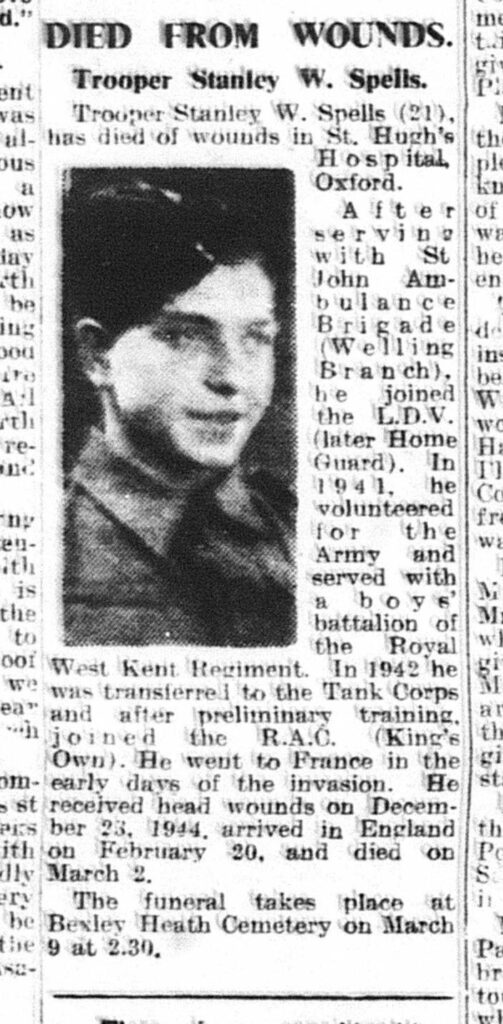
It must have been at some time during this fighting that Sidney was seriously injured by head wounds…As the newspaper cutting tells us he was injured on December 23rd 1944, arrived in England on February 20th, and died on March 2nd.
The Spells family
Stanley had been born on 27th September 1923. His parents had married in Lewisham in 1917. Henry Edwin Spells (1888 – 1966) and Maud Florence Spells (nee Fraser 1889 – 1971) were originally from Essex and Henry appears to have been in the regular army – the 1921 Census finds them at the Portobello Barracks, Dublin, with Henry serving with the Worcestershire Regiment. In 1927 the family were in Honley Road in Catford. By late 1930s they had moved to Welling at 81 Porthkerry Avenue where they remained for another dozen or so more years after war. The 1939 Register shows Stanley as being single, and a junior office clerk for a film company. Henry was a Cinema Watchman (this would have been at Welling’s Granada). Also living there were Stanley’s grandparents – Harry (a retired bricklayer) and Alice.
As the newspaper cutting also show, Stanley had served with the Welling St. John Ambulance Brigade before the war, then with the local Home Guard before joining up in 1941 when he would have been just 18…
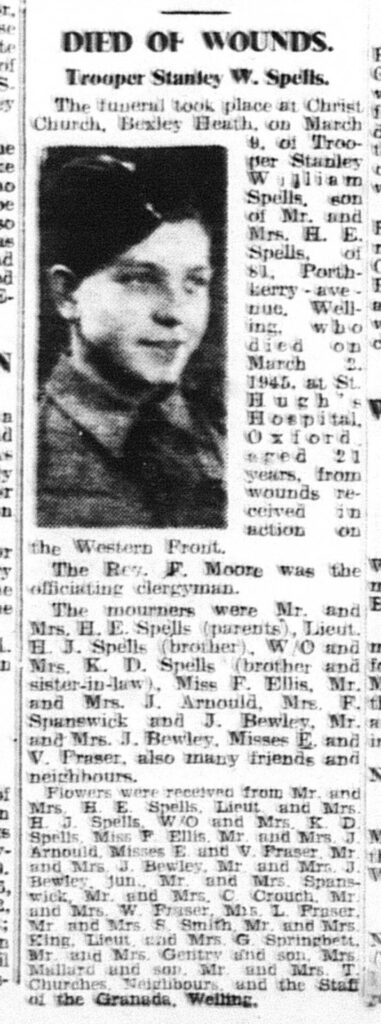
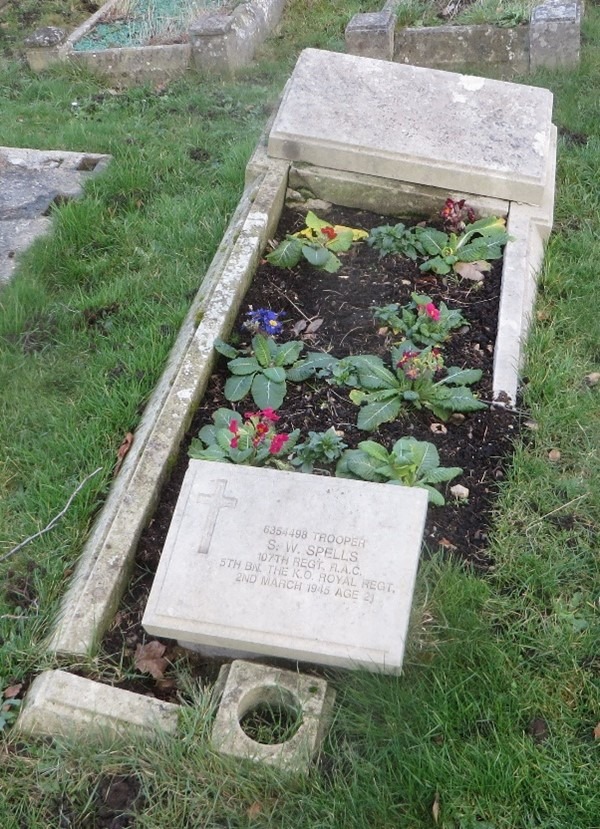
Stanley’s funeral took place on March 9th1945 at Christ Church Bexleyheath, and he was buried in the cemetery behind the church…
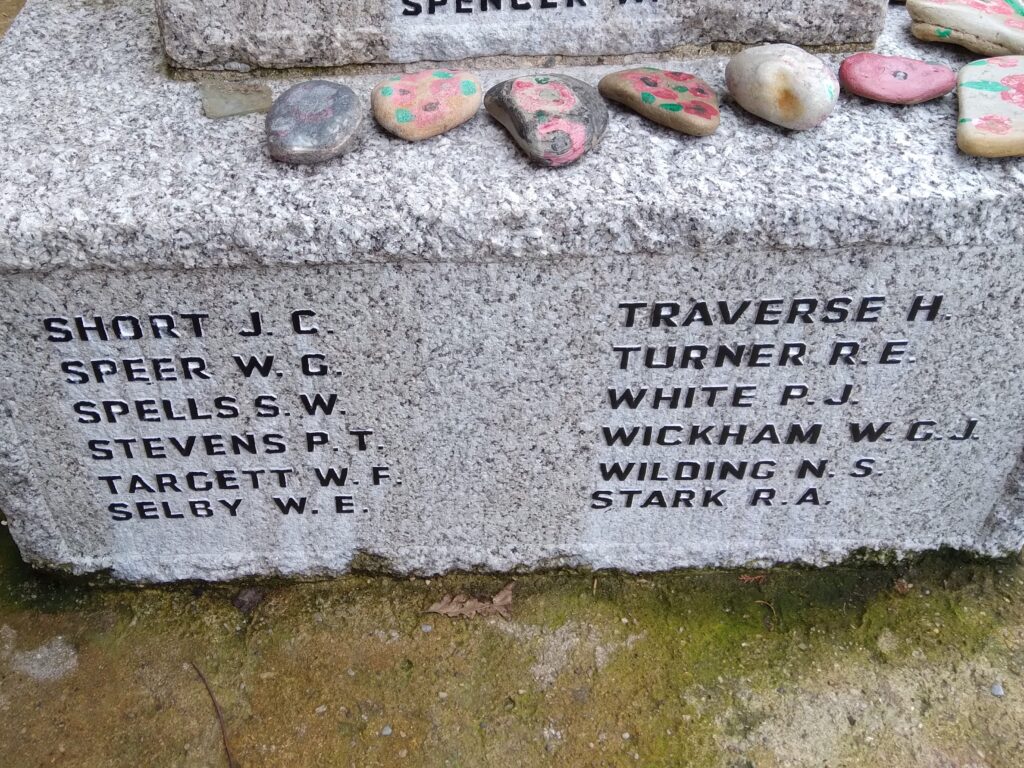
Pictured are the newspaper cuttings, a Christmas scene at the Oxford Military Head Injuries Hospital, Stanley’s grave in Bexleyheath, and his name on the Welling war memorial.
…………………………………………………………
If anyone is able to add any extra information, provide more family details, or suggest any corrections, please let us know – also, if anyone has any more photos of this individual listed on our memorials, please get in touch. Thank you.

Commemorated
- Welling War Memorial
- Bexleyheath Cemetery
This story has been researched by volunteers. We have taken every effort to ensure its accuracy. If you are related to Stanley William Spells, or if you have any further information, please do get in touch.