


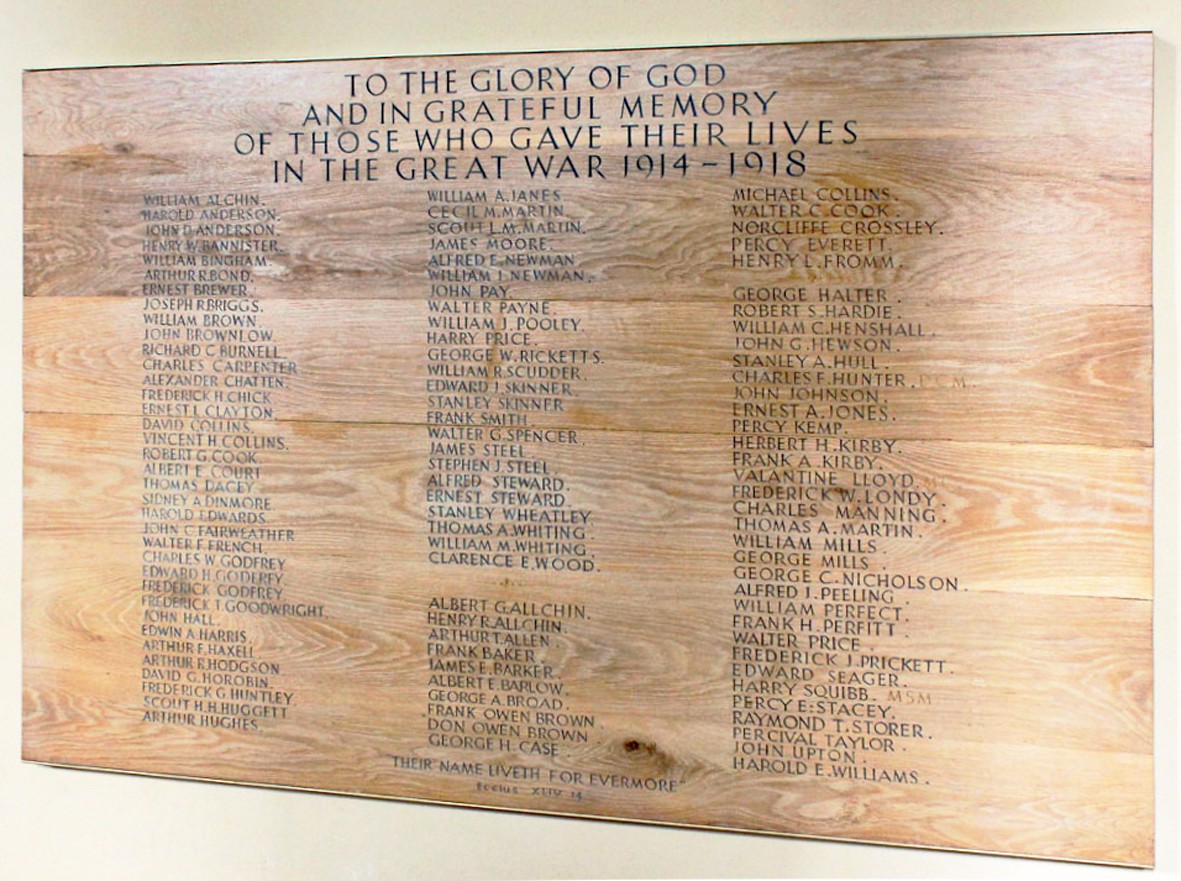
Albert Barlow was born in Birmingham on the 2nd May 1892, the only son of Alfred and Annie Louisa. The family worked in Birmingham’s metal trades – Alfred was a brass polisher, and young Albert a machinist.
Like many young men at that time, however, Albert chose to emigrate. He is recorded as an 18 year old on a passenger list of 1910 aboard the “Hesperian” from Glasgow to Quebec.
Just four years later, though, he had joined the Canadian army: we have some of his details from Canadian military archives – he enlisted on 24th September 1914, just one month after war was declared. His trade was “machinist” and he was unmarried. We also know that he was tall – 5ft 11inches, with a fair complexion, brown hair and eyes. (He also had a mole on his right hand, and a scar on his right forearm – possibly from a machine injury?)
His final military records state: “Killed in action – 14/6/1916 – St. Eloi sector”
A history of the Canadian army in the summer of 1916 states:
“The Canadian Corps remained in the Ypres Salient until the beginning of September
its role “stationary yet aggressive”…
On the 14th June the Canadian Corps played host to King George V and the Prince of Wales. While the royal visitors looked on from Scherpenberg Hill, near Kemmel, 6-inch
howitzers of the Corps Heavy Artillery and field guns of the 2nd Divisional Artillery and a Belgian unit under command of the 3rd Divisional Artillery bombarded the St. Eloi
craters.
An officer wrote:
“For the continual rain contributed to the softening up of the enemy troops, which were exposed to heavy fire day and night. It was a meteorological viewpoint which the Canadian veteran lying in lashing rain in no man’s land until the assault or standing knee-deep in water in the assembly trenches might find difficult to share.”
One such soldier would have been Albert Barlow – he was killed on 14th June (the same day that King George V was visiting the Canadian army corps). He was 24, and has no known grave: he is commemorated on the Menin Gate Memorial.
We can only imagine the horror of his parents, Alfred and Annie Louisa – they had seen their only son emigrate in 1910, only to return to Europe to die in 1916.
After the war their address was given as 61 Wickham Street, Welling.
Commemorated
Links
This story has been researched by volunteers. We have taken every effort to ensure its accuracy. If you are related to Albert Edward Barlow, or if you have any further information, please do get in touch.