


Don Owen’s parents, William Owen Brown and Jane Tilley, were married at St Mary Magdalene church in Bermondsey on the 20th October 1870. According to the parish record, his father Joseph Hawkins Brown was employed as a waterman and Jane’s father was a soldier. William was 28 years old and Jane was 26.
Born in 1895, Don was the youngest of seven children. The eldest, Edith was born in 1879 at Horsley Down, Surrey. Isabel was born in 1880 at Bermondsey, she died aged 2. Hannah was born in 1882 at Bermondsey. William was born in 1885 at Greenwich. Frank (killed on SS Persia in December 1915), was born in 1887 at Greenwich. Martina was born in 1890 at Greenwich.
According to the baptism record for Don on 18th August 1895, the Browns were living at 97 Ravensbourne Road, Greenwich. His father William’s occupation is listed as a Railway Ticket Collector. By the time of the 1899 Electoral Register they had moved to 144 St. John’s Road, Deptford, where they stayed until at least the time of the 1911 census. This shows a 15 year old Don living there with his parents and his elder sister Martina, now 21. Also at the same address are Don’s cousin, Sidney Beazley (15) and the Bowen family – John Bowen (57), his wife Sarah Ann (60) and their 30 year old daughter Ada. At some point before 1915 we know the family moved to 12 Carlton Villas, Welling, as this was recorded on the National Probate Calender of 1916 with regard to Don’s brother Frank’s estate.
No service records could be found for Don apart from his medal index card. This shows that he enlisted in the 11th Battalion Royal Sussex Regiment and was entitled to the Victory medal and the British War medal and that his regimental number was SD/3885.
The 11th Battalion was formed on 7th September 1914 by Lieutenant Colonel Claude Lowther MP. The 11th, 12th, and 13th battalions were ‘pals’ battalions and were also known as the 1st, 2nd and 3rd South Downs battalions or Lowther’s Lambs after its founder. Don would have enlisted very close to this date as some 1,100 men signed on in the first 56 hours and the prefix ‘SD’ (South Downs) to his number was given to the original enlistments.
They trained at Cooden Camp near Bexhill from September 1914 to July 1915. The War Office then took control of the battalion and they moved to Detling Camp, Maidstone. The battalion then moved to North Camp, Aldershot on 29th September 1915. In October 1915 they joined the 116th Brigade of the newly formed 39th Division. The division, originally formed at Winchester, moved via Aldershot to Witley in October/ November 1915.
The division boarded a troop ship at Southampton on 5th March 1916 and landed at Le Havre the following day. From there they moved to trenches in the Fleurbaix and Festubert sectors (where the war poet Edmund Blunden-Undertones of War- was posted in May 1916) and then on to Richebourg where they took over the trenches opposite a German held salient in the line, known as the ‘Boars Head’ due to its shape on the map.
The plan was to start a diversionary attack on June 30th 1916 to prevent the Germans from reinforcing their troops in the Somme the following day when the allies were planning a massive push. This would also remove the salient from the German line which was a thorn in the side of the British high command.
The 11th battalion would lead the attack with the 12th on its right flank and the 13th in reserve. When the 11th battalion commander, Lieut/Col Grisewood , saw the plans he was concerned, and told his superiors that the assault with untested troops over unfamiliar ground would lead to disaster. One report has quoted him saying to his brigade commander, Major General Dawson, “I am not sacrificing my men as cannon-fodder!”
Dawson lost faith in the ability of the 11th battalion and its commander. He dismissed Grisewood and relegated the battalion to a reserve role, their place being taken by the 13th battalion.
The attack began at 03:05 on 30th June, after the artillery had lifted their bombardment of the German positions. The enemy was waiting for them. Once the shelling stopped, the Germans emerged from their dugouts, sent up red flares and raked the attackers in no man’s land with machine gun fire. The attack was considered a success as the South Downs had reached the enemy’s trench and held it for four hours killing many in the process. However the 3 battalions lost a total of 17 officers and 349 men. Over 1000 were wounded or taken prisoner. The 13th battalion was all but wiped out. During this battle CSM Nelson Victor Carter of the 12th battalion was awarded the Victoria Cross for his conspicuous bravery in taking a machine gun post and repeatedly returning to no man’s land to carry wounded men to safety before being mortally wounded himself. The 11th battalion sustained 116 casualties alone in their support role, one of these being Don Owen Brown.
In a soldier’s will, Don left all his possessions to his father. He is buried at St. Vaast Post Military Cemetery, Richebourg-L’Avoue.
The 30th June became known locally as “THE DAY SUSSEX DIED.”
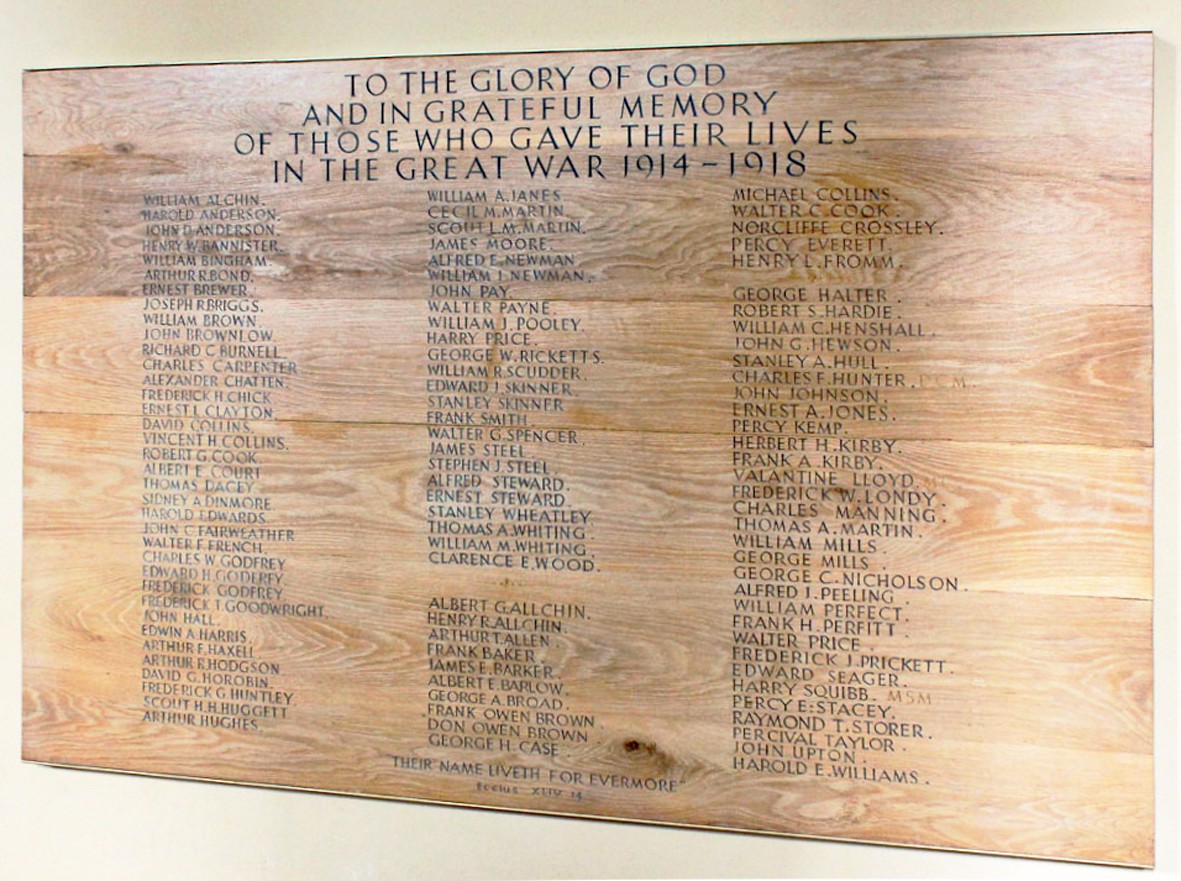
Don Owen’s father, William Owen Brown, died in 1922, aged 77. His mother, Jane, died in 1938, aged 84. They are buried in St Michael’s Churchyard, near to the East Wickham Memorial which commemorated their son.


Commemorated
Links
This story has been researched by volunteers. We have taken every effort to ensure its accuracy. If you are related to Don Owen Brown, or if you have any further information, please do get in touch.