


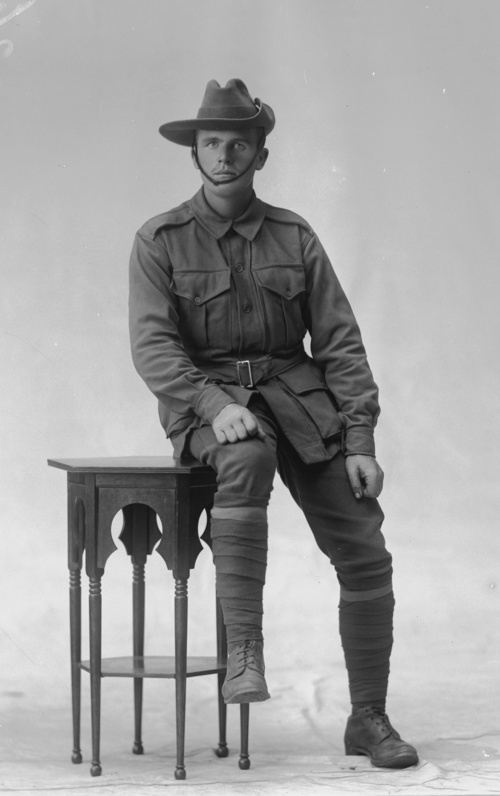
Norcliffe was born on the 4th December 1889 and lived his first two years at 15 Ruthin Road, Westcombe Park, London, and was baptised on the 5th January 1890 at ChristChurch, Greenwich. He was named after his maternal grandfather, Norcliffe Spenser, a share broker.
Norcliffe’s father, Samuel, was born in around 1862 in Derbyshire and his mother Edith (nee Spenser) was born in Halifax in around 1865. They were married in 1886 at Woolwich (Edith’s father giving his profession as a ‘gentelman’) and the couple had six children: Mary Dora (born c.1888), Norcliffe, Edith (born 1891), Ann Joan (born 1899), Joseph Spenser (born 1902) and Margaret-Hilda (born 1903).
By 1891 the family were living in Blaxland Villas, 41 Bellegrove, Welling. Norcliffe’s father was a schoolmaster and the family were affluent enough to employ a live-in servant called Elizabeth Weaver. At the age of 3, on 28th August 1893, Norcliffe started at Foster’s School. In March 1895 his younger sister, Edith, also a pupil at the school, sadly died. Norcliffe was taken out of school for a period between 3rd June 1895 and 16th September 1895. He moved to the Upper School in April 1896.
In 1901, when Norcliffe was 11 years old, the family were living at 61 Heathwood Gardens in Charlton, along with a young servant called Dora. Unlike many of his friends from Foster’s who left for work, Norcliffe was sent to Addey and Stanhope Secondary School in New Cross to continue his education.
By 1911 the family had moved back to Welling, to The Woodlands, Bellegrove, Welling and Samuel had become a Head Teacher for London County Council. Norcliffe’s sister was working as an Elementary School Teacher, also for the London County Council.
In the meanwhile, Norcliffe had decided to emigrate to Australia. He sailed on the 30th September 1910 as a 3rd class passenger on the Otranto, giving his profession as an Engineer. He arrived at Freemantle, Western Australia and went to live in Corrigin, situated 142 miles S.E of Perth in the wheatbelt of W.A, where he worked as a farmer.
Norcliffe enlisted with the Australian Imperial Force on 20th January 1915, with the 11th Battalion and was sent to Gallipoli.
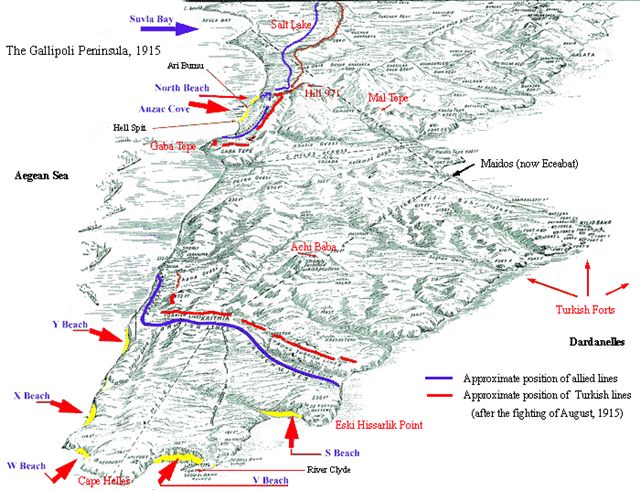
The 11th Battalion was among the first infantry units raised for the AIF (Australian Imperial Force) during the First World War. It was the first battalion recruited in Western Australia and, with the 9th, 10th and 12th Battalions, formed the 3rd Brigade. The Battalion was raised within weeks of the declaration of war in August 1914 and embarked for overseas after just 2 weeks of preliminary training. It arrived in Egypt to continue its training in early December. The 11th Infantry Battalion set sail for Gallipolli on the 19th April 1915. They embarked at Freemantle, Western Australia, on board HMAT Argyllshire. The 3rd Brigade (the 11th being one of the units) was the covering force for the Anzac landing on 25th April 1915 and was the first ashore at North Beach around 4:30am. Ten days after landing, a company from the 11th Battalion mounted the first raid of the war against Turkish positions at Gaba Tepe). Subsequently, the Battalion was heavily involved in defending the front line of the Anzac beachhead. In August, it made preparatory attacks at the southern end of the Anzac position before the Battle of Lone Pine. The 11th Battalion continued to serve at Anzac until their evacuation in December 1915.
In August 1915, Norcliffe fell ill and was admitted to hospital. He developed dysentry and was transferred to a hospital in Malta before being sent to King George’s Hospital, Stamford Street, London to recover. In February 1916 he was returned to duty, in Egypt, at Ghezirah and then Serapeum before being sent to join the British Expeditionary Force in France. He arrived in Marseille on 5th April 1916.
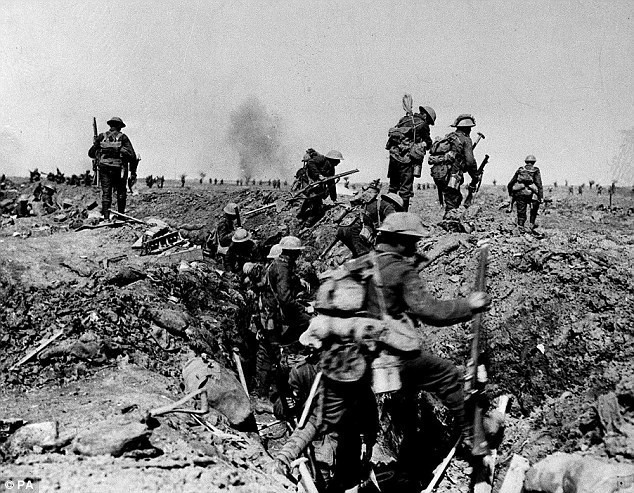
Throughout June 1916, the 11th Battalion was placed in support of the front as it was brought back up to strength. The following month, they were moved to the Somme and were committed to the fighting around Pozieres. After arriving at Albert on the 19th July, amidst a gas attack, the Battalion spent the next two days preparing to attack, working to improve trenches and cache stores, during which they were subjected to heavy artillery bombardment. The attack was put in just before midnight on the 23rd July and was a costly success. Amidst heavy casualties the 11th Battalion took the forward German trenches and amidst the confusion of the fighting advanced beyond their limit of exploitation, entering Pozieres and moving beyond where they became embroiled in close quarters fighting.
During the night of the 24/25th July, the Australians attacked again, but after establishing a new defensive line, the 11th was forced to withdraw after suffering heavily from both friendly and enemy shelling. On the morning of the 25th July, further casualties were sustained by German artillery. The German infantry then launched a counterattack on the Battalion’s right, but the Australians managed to hold their ground. They remained in the line throughout the day before the 19th Battalion arrived to relieve them. Having lost 19 officers and 512 other ranks killed, wounded or missing, the Battalion had suffered the most of all the 3rd Brigade’s Battalions and were moved back to Berteaucourt to be rebuilt.
The Australian flag still flies at Pozieres.
Norcliffe was reported as missing on the 25th July 1916 at the Battle of Pozieres. His modest effects were returned to his father: letters, photos, cards, Bible, bank book, toothbrush, pipe (broken), bullet in shell, cheque book, note book, small wallet, 4 stamps, 1 handkerchief, tin of chalk and 2 badges.
Norcliffe’s family held out hope that he had been taken as a prisoner of war, and wrote many letters trying to find out whether he was still alive, including to prisoners of war who may have known him. One letter says: “As in many other cases the death of our son is shrouded in mystery … I have not been able to get any definite information from any source. A few small effects were returned amongst which was his disc, which he wore in Gallipoli. Now had this disc been taken from his body there would have been no uncertainty in the matter.”
On 20th June 1917 a Military Court of Enquiry determined that Norcliffe had died.
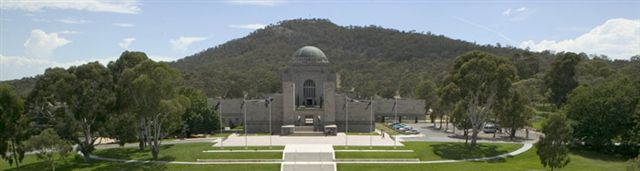
There is no known grave for Norcliffe but he is remembered on the Villiers-Bretoneux Memorial, The Anzac Memorial ACT (Australian Capital Territory) and on both the East Wickham Memorial in St Michael’s Church and the Welling Memorial at St John’sChurch.
Norcliffe’s full military records and correspondence from his mother can be viewed online at the Australian War Memorial Archives and here.
Commemorated
Links
This story has been researched by volunteers. We have taken every effort to ensure its accuracy. If you are related to Norcliffe Crossley, or if you have any further information, please do get in touch.