


George was born on 24th September 1874 in St Giles (Soho), London. His father was George born about 1850 in Liverpool and his trade was a Blacksmith. His mother Hannah (nee Hall) was born in Battersea about 1852. He had 7 siblings William (born abt 1870), Alice (1873), Charles (1875), Charlotte (1880), Ernest (1883), Lilian (1892) and Frederick (1894). His first known address is in 1881 when the family lived at 9 Henley Street, Battersea. Whilst living at 9 Henley Street, George attended Battersea Park Road School, Wandsworth. He was admitted on the 1st November 1881 and left on the 14th December 1884.
By 1891, George has moved out from the family home and is found living at 11, Clarendon Place, St Pancras, London, as a boarder. He is employed as a Cutler (a person who either makes or sells cutlery). It is interesting to note that the head of the house Charles Johnson and his eldest son Charles are both Gun Implement Makers.
In September 1893, at the age of 18yrs 10 mths, George enlists in the Royal Artillery at Woolwich. He was described as having brown hair and blue eyes and was just over 5 foot 4 inches tall and weighed 8 stone 4 pounds. It would appear that this was only for a short period, as we find that on the 23rd December 1899 he marries Ethel, Amelia Vose at St Margarets Church, Plumstead and he states that his profession is a Blacksmith. They were married from 4, Brambleberry Road, Plumstead which is the address of Cornelius and Elizabeth Vose, Ethel’s parents. By 1911 they have had 4 children, Hilda Lilan (born 1901), Stella Maud (1903), Doris Ethel (1906) and George Vose (1911).
When the 1901 census is taken, George is back with the Royal Artillery as a Gunner in “A” Division. Ethel is living with her parents at 4 Brambleberry Road and Hilda has just been born.
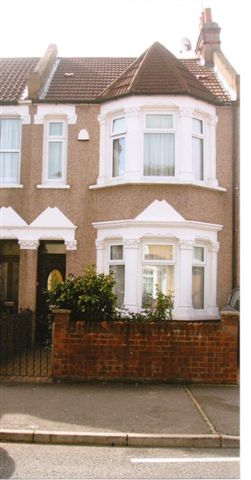
By 1911, George has been promoted to Staff Sergeant and the family are living at 29, Sandy Hill Road, Woolwich. Ethel is also working at the Royal Artillery Garrison.
Royal Garrison Artillery (RGA)
At the end of the 19th century the RGA, which was part of the Royal Artillery, was divided into divisions, the Eastern Division at Dover, the Southern at Portsmouth and the Western at Devonport.
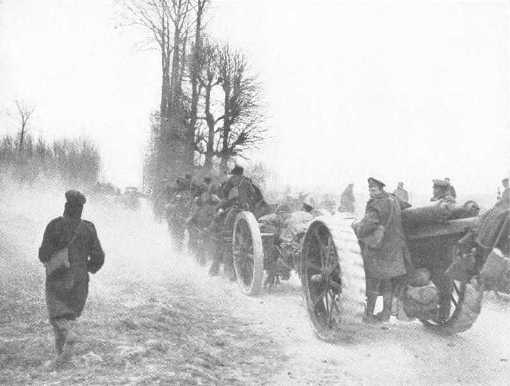
The RGA developed from fortress-based artillery located on British coasts. From 1914 when the army possessed little heavy artillery it grew into a large component of the British forces. It was armed with heavy, large calibre guns and howitzers that were positioned some way behind the front line and had immense destructive power.
The Role of the Heavy Battery
Heavy Batteries (RGA) were equipped with heavy guns, sending large calibre high explosive shells in fairly flat trajectory fire. The usual armaments were 60 pounder 5 inch guns, although some had obsolescent 5 inch howitzers. As British artillery tactics developed, the Heavy Batteries were most often employed in destroying or neutralising the enemy artillery, as well as putting destructive fire down on strong points, dumps, stores, roads and railways behind enemy lines.
31st Heavy was part of the 4th Division within the British Expeditionary Force (BEF). They landed in France on the night of the 22nd and 23rd August 1914.
They were also one of the British Units that took part in the Christmas Truce of 1914.
4th Division was a Regular Division stationed at Woolwich, Shorncliffe, Dover and Colchester prior to the outbreak of the war. They arrived in France in August 1914 and served in France and Flanders until the Armistice.
As George was a regular soldier, he was sent to France immediately, on the 21st August 1914, as part of the BEF. It is known that the 31st Heavy Battery saw action in the Battles of Mons, The Marne, The Aisne, and First Ypres as well as the winter operations of 1914/15. During 1915/1916 they were involved in many of the major battles of the Somme.
In December 1914 George became unwell. He stayed on the Front until March 1915 when he was sent back home until being medically discharged as no longer physically fit for war service on 9th November 1915. His medical discharge records note George’s description of his condition “man states it originated in Belgium in 1914. He [thew?] first noticed pain of left side of chest and shortness of breath. He has never had any serious illness and cannot give any account of the origin of the present disability. He is sallow and anemic and does not improve under treatment”. The board concluded that his illness was not the result of military service and he was awarded a pension of 36 shillings. His character was described on the medical discharge form as ‘exemplary’.
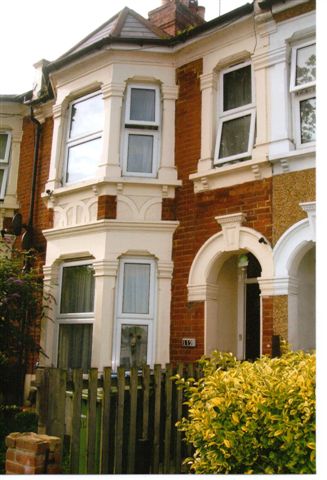
George died on 2nd June 1916 at home, 112 Wickham Street, Plumstead. His death was caused by:
- Aortic Disease – this is a severe, painful, potentially life-threatening abnormality of the aorta (main blood vessel which takes the blood from the heart).
- Syncope – loss of Consciousness
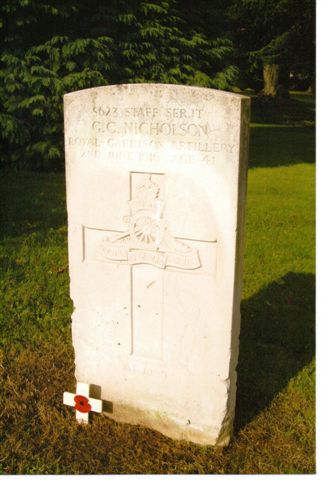
He is buried in Woolwich Cemetery (B267).
Besides posthumously receiving the 1914 Star, British War and Victory Medals, he was awarded the Long Service and Good Conduct Medal.
After George’s death, it would appear from the records that Ethel moved to 1, Elsa Road, Welling.


Commemorated
Links
This story has been researched by volunteers. We have taken every effort to ensure its accuracy. If you are related to George Charles Nicholson, or if you have any further information, please do get in touch.