


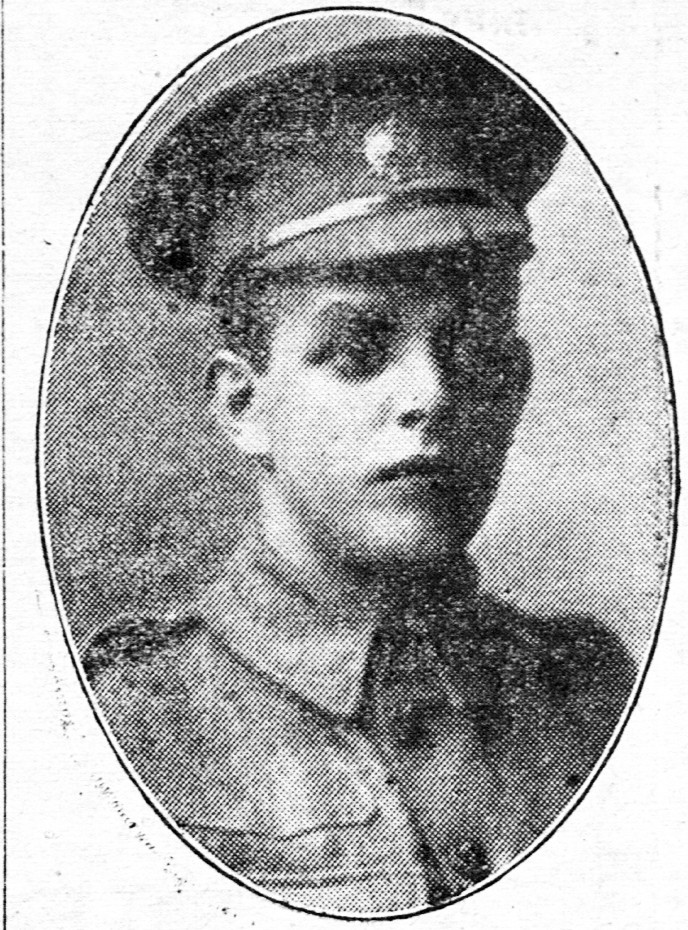
Edgar’s father, Frederick William Seager was born on 2nd December 1863; his birth was registered at St. Pancras, London. By the time of the 1881 census he was 18 years old and was living with his parents at 59 Bexley Road, Erith. The census also shows that he was a trainee school teacher.
Before the 1891 census he had moved back to Kinston upon Thames where he married Alice Maud Mary Long (born circa 1869 in Exmouth, Devon) on the 17th January of that year. The census shows that they were living at 27 East Road, Kingston upon Thames and that he was an Elementary School Teacher.
Edgar was born in October of that year; his birth was registered in Kingston in the 3rd quarter 1891. He was christened at St. Luke’s Church, Kingston on 1st November. Sometime between 1891 and the beginning of 1894 the Seager’s moved to Bexleyheath. Their next child, Edith Maud was born in the first quarter of 1894 and her birth was registered in Dartford.
The 1901 census shows their address as being 2 Sidney Villas in the parish of Christchurch, Bexleyheath. Edgar is 9 years old and his younger sister Edith is 7. They also have a lodger, a George W Brown.
By the time of the 1911 census the family had moved again. This census shows their address as being Belle Vue, Park View Road Welling. Frederick is now 47 and is working as an Assistant Teacher for Erith Urban Council. His wife, Alice is now 42 and the census shows that they have had two children. Edgar is employed as a Builders’ Clerk and is 19 years old. His younger sister Edith is 17 years old and is working as a Drapery Assistant. Frederick’s father, Thomas Francis is also living with them. He is 82 and is a widow.
No service records were available for Edgar apart from his Medal Index Card. This shows that he joined the 1/5th Battalion London Regiment (London Rifle Brigade) which was a Territorial unit. His original service number (9310) indicates that he joined the Territorials around August 1911.
At the outbreak of the First World War (4th August 1914) the 1/5th Battalion had their Regimental Headquarters at 130 Bunhill Row EC1. They were part of 2nd London Brigade, 56th (1st London) Division. During August the Battalion was mobilised and sent to the live firing camp at Bisley, Surrey. They then moved to Crowborough Training Camp near Tunbridge Wells for final training for war.
On the 5th November 1914 the Battalion proceeded to France, landing at Le Havre. They then joined the 11th Brigade of 4 Division and saw action in the 2nd Battle of Ypres. It was during this battle that the Germans first used chlorine gas against the Allied lines. After suffering heavy losses during the battle the Battalion were taken out of the line and transferred to GHQ Troops to recover and were formed into a composite battalion with 1/12th and 1/13th Battalions. On 11 August 1915 the 1/5th Battalion resumed its identity and transferred to the 8th Brigade of 3 Division on 25th October.
During his Battalions time in reserve Edgar came back to England and got married. His marriage is recorded as being in the 3rd quarter of 1915 to a Dorothy Wallis in Dartford.
As part of 3 Division the Battalion saw action in the following;
1916 Diversionary Attack at Gommecourt in support of the main Battle of the Somme on 1st July. Battle of Ginchy on 9th September. Battle of Fleurs-Courcelette from 15th to 22nd September. Battle of Morval from 25th to 28th September. Battle of Transloy Ridges from 1st to 18th October.
1917 Retreat to the Hindenburg Line from 14th March to 5th April. The Battle of Arras from 9th April to 16th May. Battle of Langemarck 16th to 18th August. Battle of Cambrai from 20th November to 7th December.
1918 2nd Battle of Arras from 26th August to 3rd September. Battles of the Hindenburg Line from 12 September to 12 October. Lastly the Final Advance in Picardy from 17th October until Armistice Day on 11th November.
It is unclear which of these Battles Edgar would have been involved in as no service records were found. But according to a local newspaper report on his death he had been in England as an Instructor at Blackdown Camp until being posted back to the Front in July 1918. On the day of his death, 10th August 1918, the Battalion were not engaged in any particular action or battle. It is likely that he was killed by a sniper or one of the many intermittent shells that each side would fire from time to time. The article appeared in the Bexley Observer on 5th September 1918 and read as follows;
KILLED IN ACTION
SERGT. E. SEAGER, WELLINGWe have to announce the melancholy fact that Sergt. E. Seager, son of Mr. F.W. Seager, of Hiawatha, Welling, no longer serves. To the bitter grief of his parents, he was killed in action in France on the 10th ult., at the age of 27; the sad news was received on Saturday, August 24th and by his wife (engaged in a V.A.D. Hospital in Devonshire) on the Sunday.
He had only gone out in July last. Previous to this he had been doing duty as a Sergt.-Instructor at Blackdown Camp with his old Regiment, the 5th London Rifle Brigade (5th City), of which he had been a member for eight years.
He had served in France and Flanders during 1914-15 and held the Mons Star. He was a member of staff of Messrs. Pollard and Pollard Shopfitters, etc., of London and, (quoting from Mr. E. Pollard’s letter) “he was greatly respected by the whole of the staff,” as also by that of his Regiment.
He was a Freemason (London Rifle Brigade Lodge, No. 1692), and also formerly a choir boy at Christ Church, Bexleyheath. His loss to his parents and wife is irreparable, for he was a good lad and a good man.
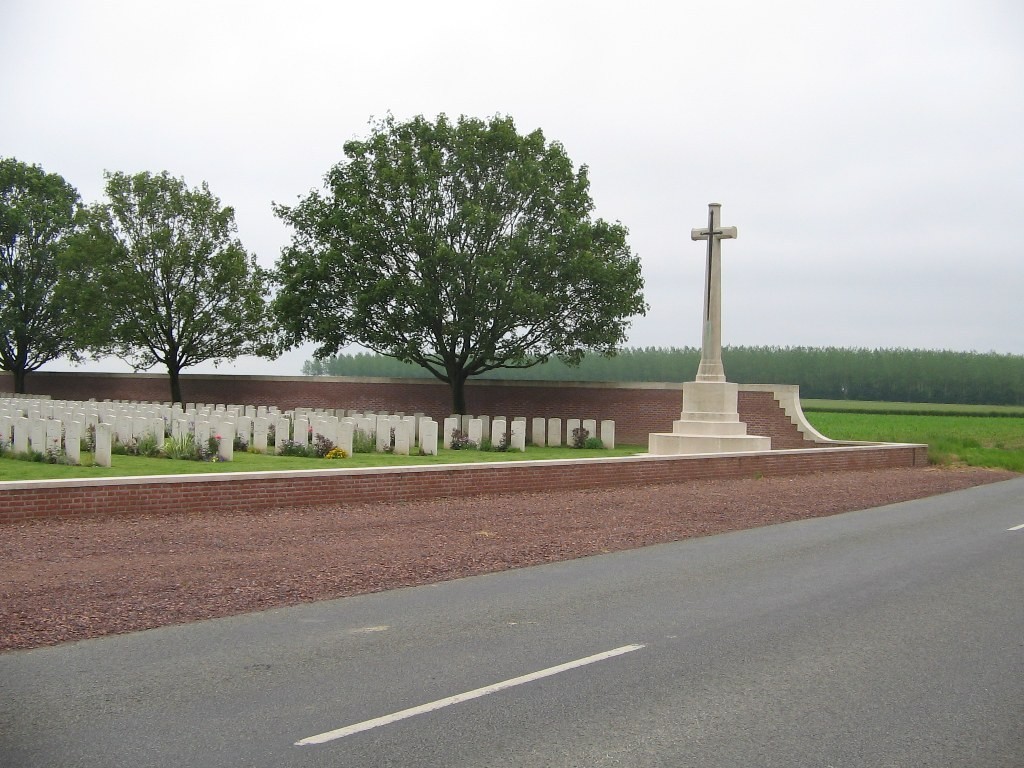
Sergeant E M Seager is buried at Beacon Cemetery, Sailly-Laurette, Somme, France. Grave Ref. 111.G.15


Commemorated
Links
This story has been researched by volunteers. We have taken every effort to ensure its accuracy. If you are related to Edgar Malcolm Seager, or if you have any further information, please do get in touch.